Daily stand-ups are often no fun, just a grid of faces on a video call and people often get distracted reading slack or their emails.
So I built GibeTalkin, a little 3D Wild West town that runs in your browser, where the team walks around as cowboys and cowgirls and holds the stand-up round a campfire. I made it with the help of AI, mostly in the evenings, and somewhere along the way it turned into something the team can actually use!
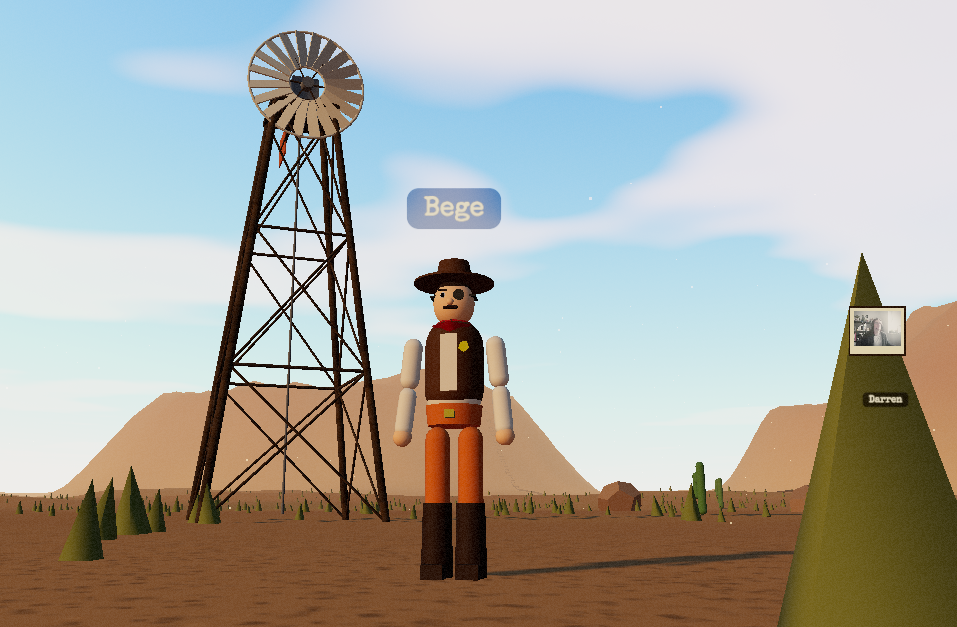
Why the wild west?
The cowboy idea goes back to lockdown. With everyone stuck at home, my boss Steve suggested doing our stand-ups in Red Dead Redemption 2. It stuck with me, and GibeTalkin is my take on it. It has the same Wild West feel, but in a slightly different artstyle and designed for meetings.
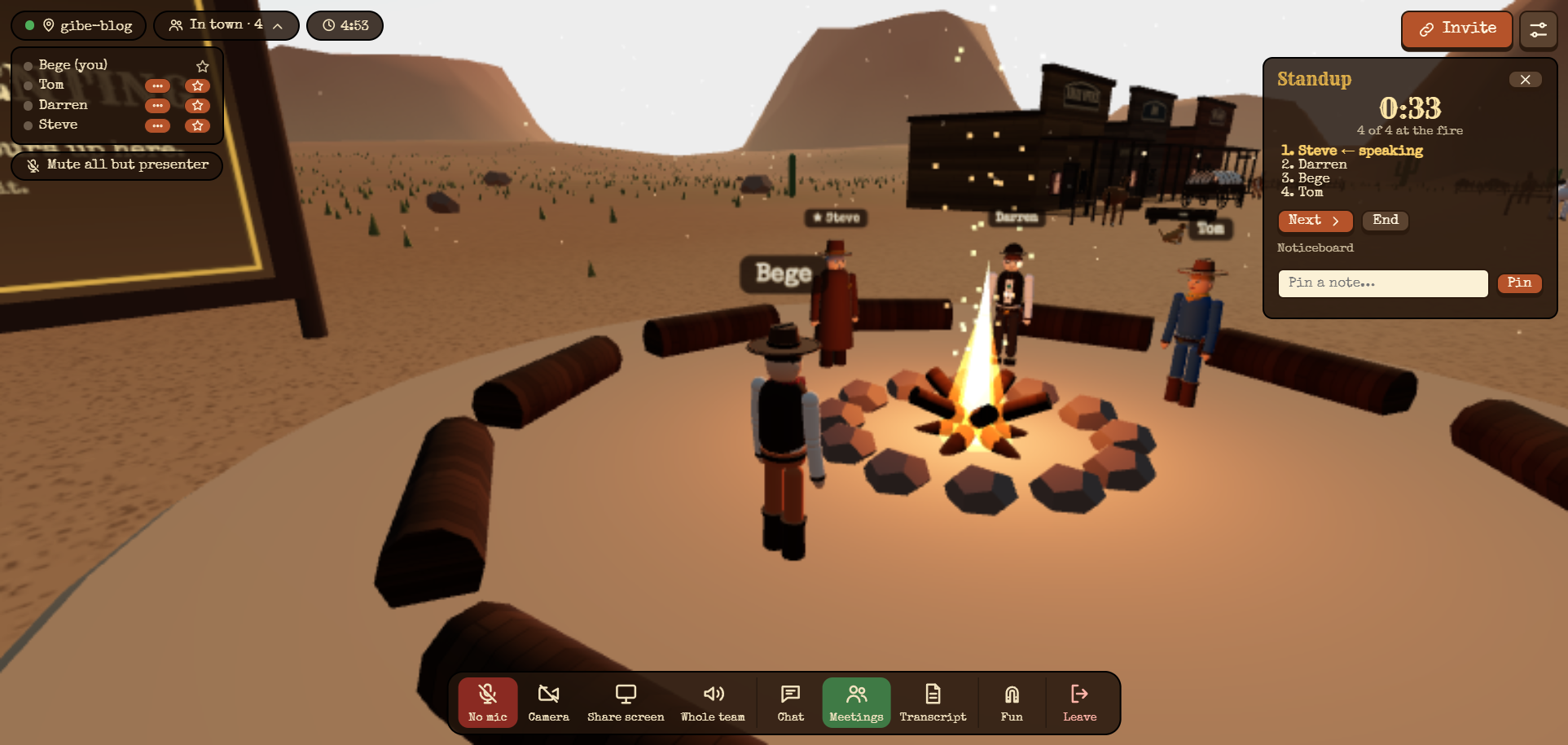
I wanted stand-ups to feel more like bumping into each other in the office and less like a boring video call. A town gives you somewhere to wander and something to fiddle with while someone else is talking and gives a greater sense of collaborating and working together.
The voice is spatial, so people near you are loud and clear, people across the street are quieter, and anyone inside the saloon sounds muffled through the walls. It makes the call feel like being in a room together, and two people can wander off for a quick chat without talking over the whole team.
Nothing to install, clientside for the win!
Clients often use lots of different communication tools, like Slack, Zoom, Google Meets or the dreaded Teams. However, with GibeTalkin there's nothing to install and no accounts to set up. You share a link, pick a name and a look in the character creator, and you're in.
It all runs in the browser and connects people directly to each other, so your calls don't pass through a server of ours.
Main features
Under the hats and spurs, it's a proper meeting tool. Here are some of it's many features:
- Stand-ups happen round the campfire. Start a standup and a bell rings to gather everyone, the speaking order is shuffled, and each person gets a timer. Whoever's speaking can be heard clearly wherever you're standing, and at the end you can download the notes, with who was there, how long everyone spoke and any actions.
- Notes pinned during the stand-up appear as WANTED posters on a board in the square. It's a silly way to track blockers, but nobody forgets them.
- Hours Poker is for estimating tickets. Everyone votes in secret, then the cards are flipped over one by one in a showdown. It's planning poker with more drama.
- There's a Happy and Sad retro board with votes and actions, plus quick polls for lunch decisions.
- You can share your screen onto the Big Screen in the town square, and anyone watching can draw on it to point things out.
- If people opt in, the browser transcribes what they say, so there's a written record of the call.
I've also tried to make it work for everyone. Every control can be used from the keyboard, there's a mic check to tell you if you're too quiet or too loud, and it works on phones and tablets with on-screen controls.
The fun bits
Once the basics worked, I kept thinking of "wouldn't it be funny if..." ideas, and with AI writing most of the code, I could try them.
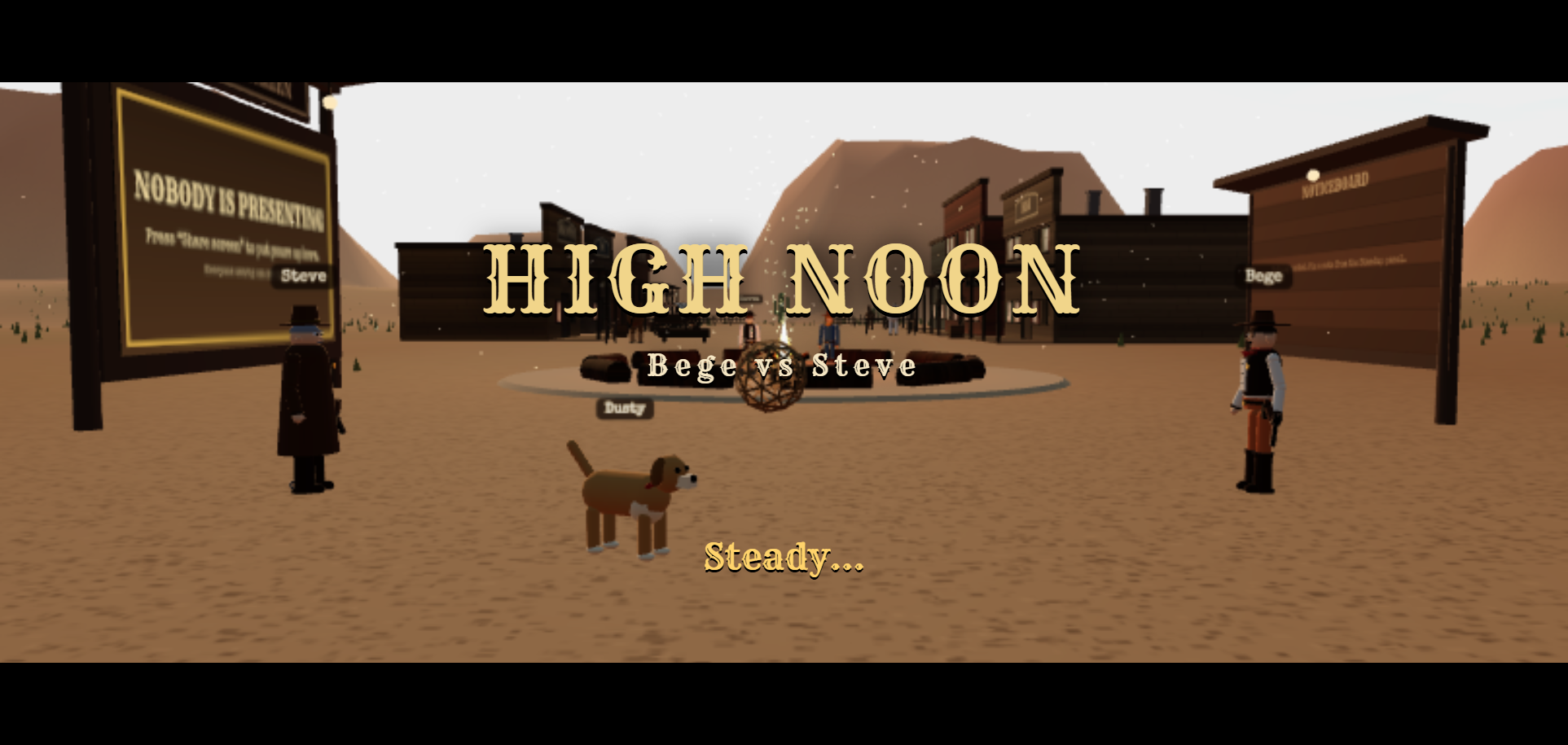
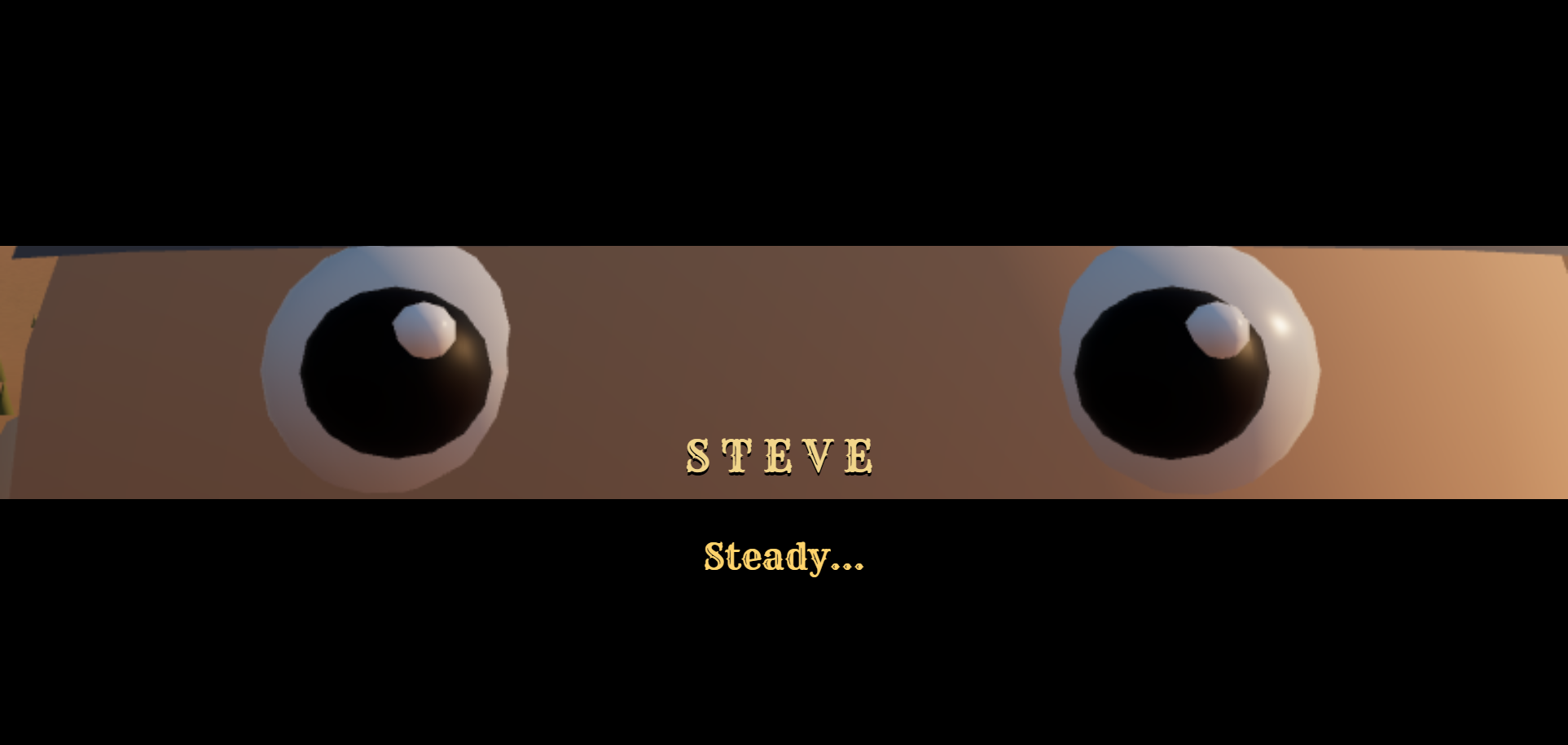
You can challenge a colleague to a quick-draw duel. You're both put on your marks ten paces apart, a short Western cutscene plays with close-ups of your eyes twitching, and whoever reacts fastest wins. There's a leaderboard outside the sheriff's office, and I fully expect people to take it far too seriously.
There are horses to ride and races to the windmill. A steam train runs through town, and if you wave at the engine the driver toots back. Dusty the dog wanders about and does tricks if you keep patting him. He rolls over, chases his tail, and eventually brings you a stick. There's a piano in the saloon you can actually play, and if you order a few too many whiskeys, you start to feel a little drunk.
If someone's being a nuisance, the team can vote to put them in jail for 45 seconds. Their voice goes muffled until they're released. Hopefully it never comes up in a real meeting, but it's reassuring to know it's there.
If the Old West isn't your thing, the whole room can switch to a starship with a bridge, a robot dog called Byte, warp speed and red alerts.
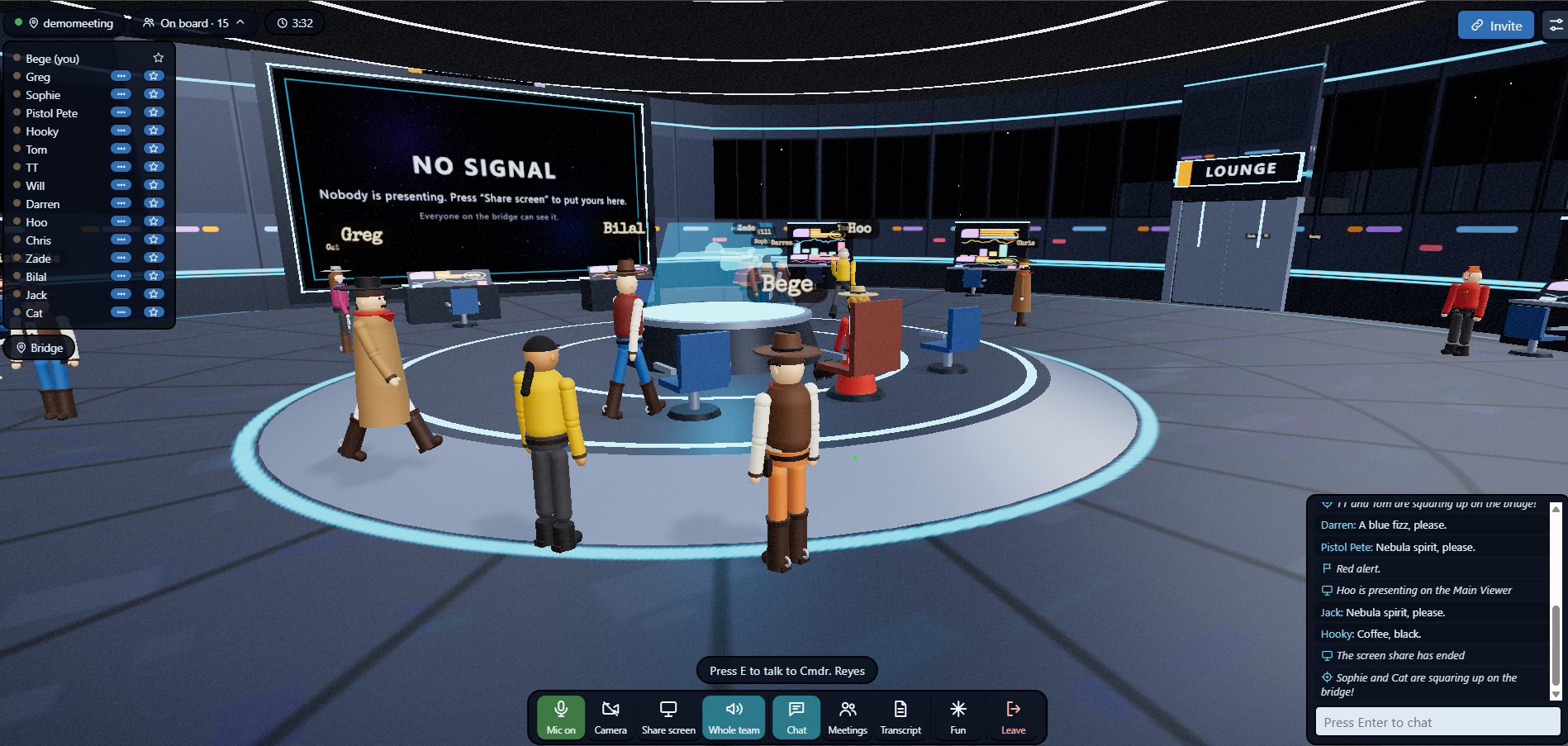
The 16-person test call
It's one thing for it to work with three people. The real test was getting sixteen of us into town at once, all talking, moving about and sharing screens
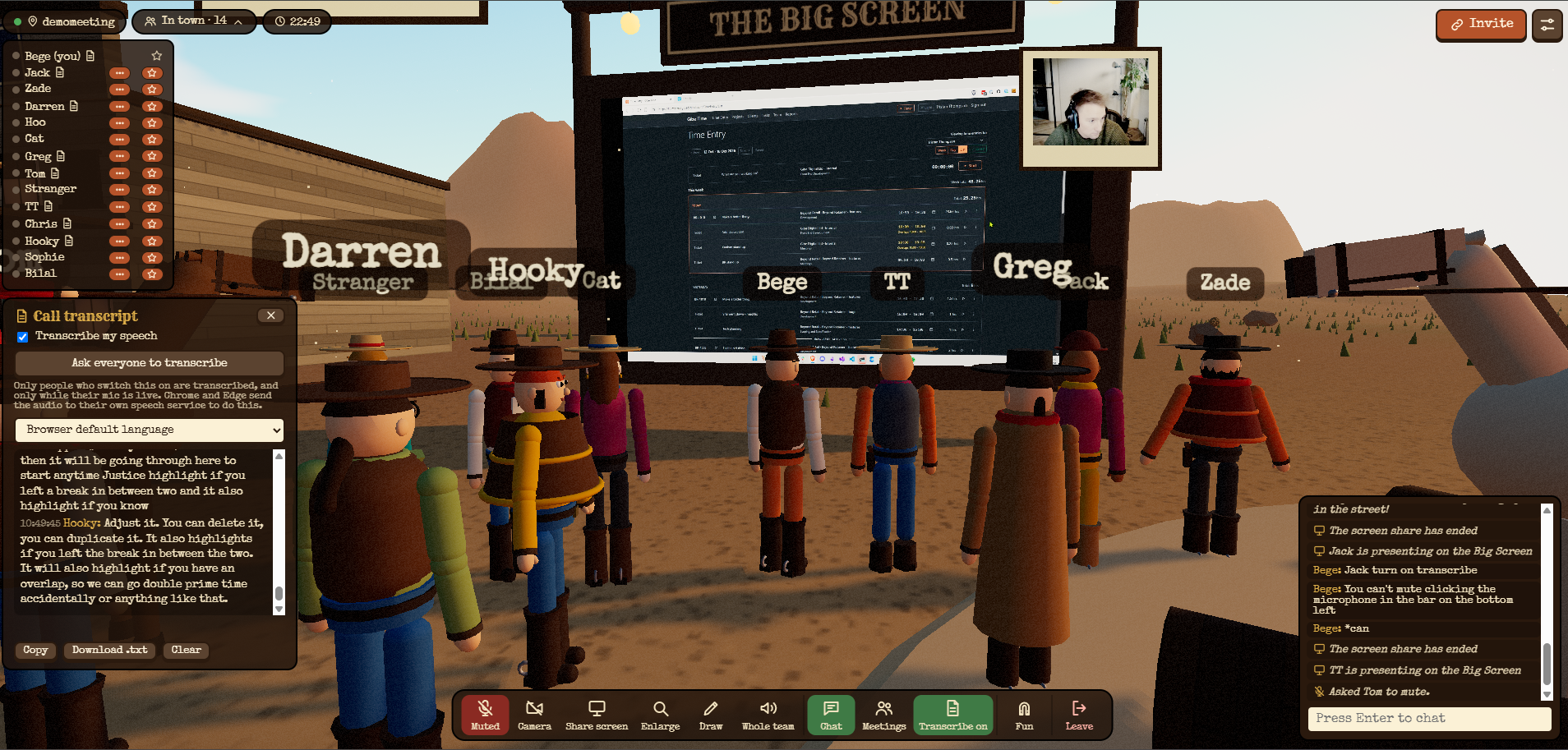
Getting there took some work. A call that size gets heavy fast when everyone sends everything to everyone else, so I changed how it shares the load. Screen sharing is now passed along in a chain, so nobody has to send more than three copies. Webcams only go to the people standing nearby, and voices send almost nothing while you're quiet. It also keeps an eye on everyone's connection and quietly rebuilds a call if it drops.
Building it with AI
Most of the code was written by Mr Claude. There's no way I'd have built something this size in my spare time on my own.
The way I worked was a bit like pairing with a very fast, very keen developer. I'd describe what I wanted in plain English ("the campfire logs should face the fire"), it would write the code and test it in a browser, and then I'd go and try it myself. It took a lot of iterations to get it right!
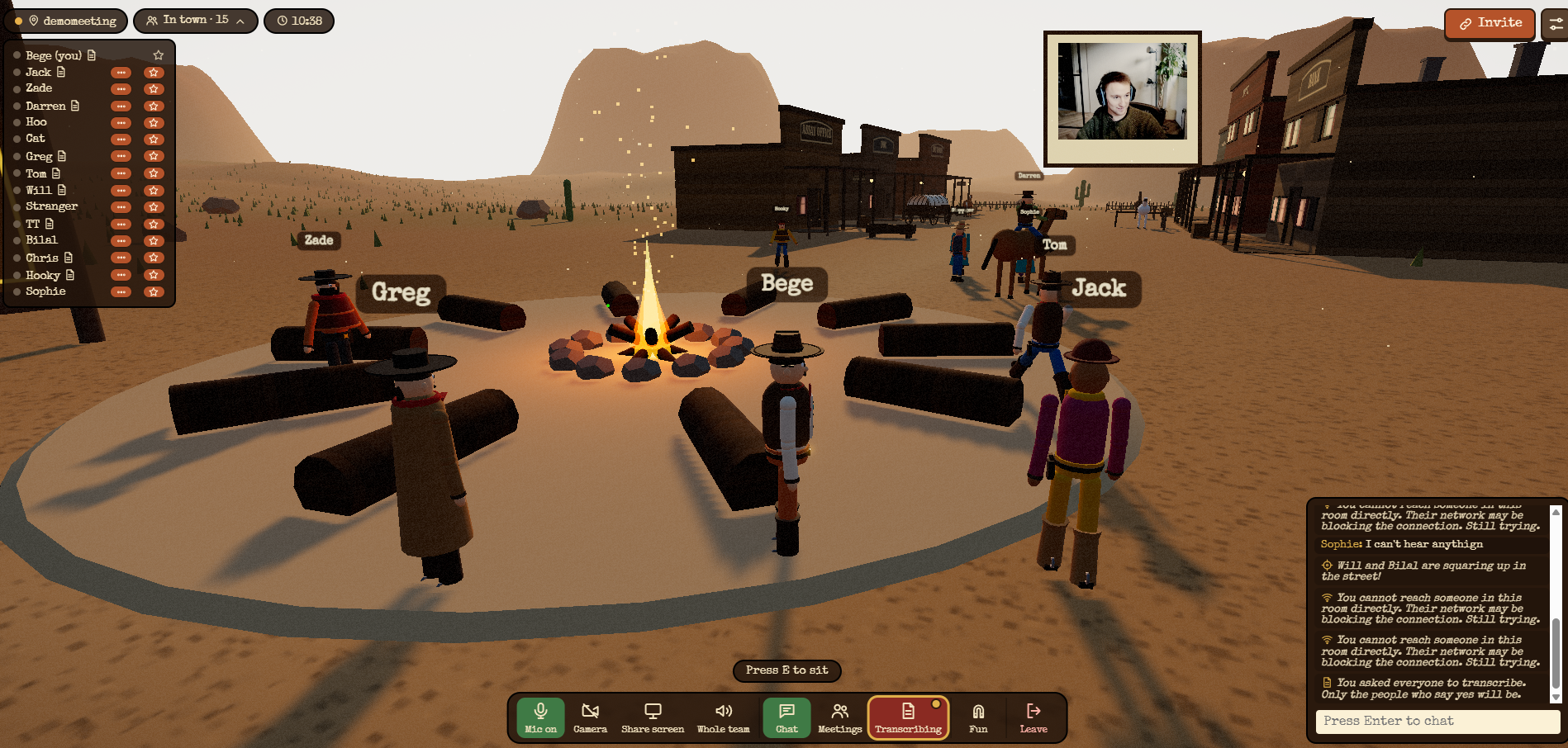
That last step mattered more than anything. The AI can do things very quickly, but it also does very silly things that you need to tweak to get right. These were some of my favourite catches.
- The logs round the campfire weren't facing the fire, which made for a very awkward stand-up circle, as the people had to straddle the logs.
- You could walk straight through the Big Screen and the noticeboard as if they weren't there.
- The bolo tie in the character creator was being drawn inside the body, so it never showed up.
Each of those took one message to explain and a few minutes to fix. When I asked it to check the whole map for places you might get stuck, it wrote a script that walked every bit of it, half a metre at a time. That's the part I found most useful. It happily did the tedious checking I'd normally skip.
It also made trying ideas cheap. When an idea takes ten minutes instead of a weekend, you try the silly ones too, which is where the duels and the wobbly whiskey came from.
The trailer
No Western is complete without a trailer, so I made one.
Conclusion
GibeTalkin started with Steve's Red Dead idea and has ended up as a tool for stand-ups, estimates and retros, with a few duels thrown in. For me, the most interesting part was how it changed the way I work. Using AI I could implement loads of my ideas and ditch the ones that didn't work without worrying that I was wasting loads of time.
If you'd like a look round, or fancy your chances in a quick-draw duel, come and find me.
I also have plenty more ideas for it for the future...
