My time at Gibe
Foreword: by Hugh Parr-Burman
In July my godson Eli joined us for work experience. He’s a smart young-man who I’m privileged to know. We’ve spent years having deep philosophical debates such as which is better, DC or Marvel.
He is a quick learner who grasped the concepts of web design and ecommerce quickly - and we had many mature discussions on topics like cyber bullying and social media influence on the young. Seeing how a 15 year old interacts with the web was insightful. I strongly recommend every company offers work experience; it’s a chance to learn for yourself as it is to offer opportunity to young people.
Here’s what he wrote from his experience (and unashamedly used AI, Gemini, to do so…)
My time at Gibe: by Eli-Gray Fehler-Williams
My recent work experience placement at Gibe has been a pivotal moment in my professional development. It provided valuable insight into the workplace environment and the realities of a career in web development and e-commerce. I was particularly impressed by the team’s welcoming and supportive atmosphere, which significantly helped alleviate my initial nerves.
To give me a taster I was given the exercise of planning a fictional e-commerce website of my choosing, for which I developed the idea for a niche replica sword retailer.
This project involved conducting a competitive analysis to evaluate the strengths and weaknesses of four primary market competitors. I subsequently developed two detailed user personas to better understand the target demographic and designed a website sitemap, incorporating essential functionalities and unique features to differentiate the concept.
Next, I generated approximately 50 user requirements and documented the rationale behind each. To prioritize these effectively, I applied the MoSCoW methodology—categorizing requirements into "Must have," "Should have," "Could have," and "Won"t have"—to distinguish critical features from secondary priorities. Subsequently, I performed an effort estimation for all 50 requirements using the Story pointing using Fibonacci sequence method (1, 2, 3, 5, 8, 13, 21, 34), with values representing effort levels ranging from 1 (lowest) to 34 (highest). This analysis facilitated precise time estimation relative to task complexity, enabling an agile approach.
I organized development into weekly sprints, allocating resources from a hypothetical £100,000 budget, with each sprint valued at £10,000. We found we could have all the most important features with budget to spare for some extras - but I was told it’s not always that easy in reality.
Additionally, I had a go at copywriting for two items, determining optimal pricing strategies, establishing product hooks, highlighting key features, and drafting comprehensive product descriptions to effectively engage the target customer base.
Throughout my work experience, I also observed internal meetings where I was tasked with taking minutes and capturing the key action points. This provided valuable insight into company operations, collaborative workflows, and real-world problem-solving.
I was also shown how coding works in practice and the sorts of things I would be doing if I were to learn to be a .NET developer. I attended a demo meeting where I learnt about new things happening with the Umbraco (Content Management System) CMS and was shown how a CMS works and why the industry uses them.
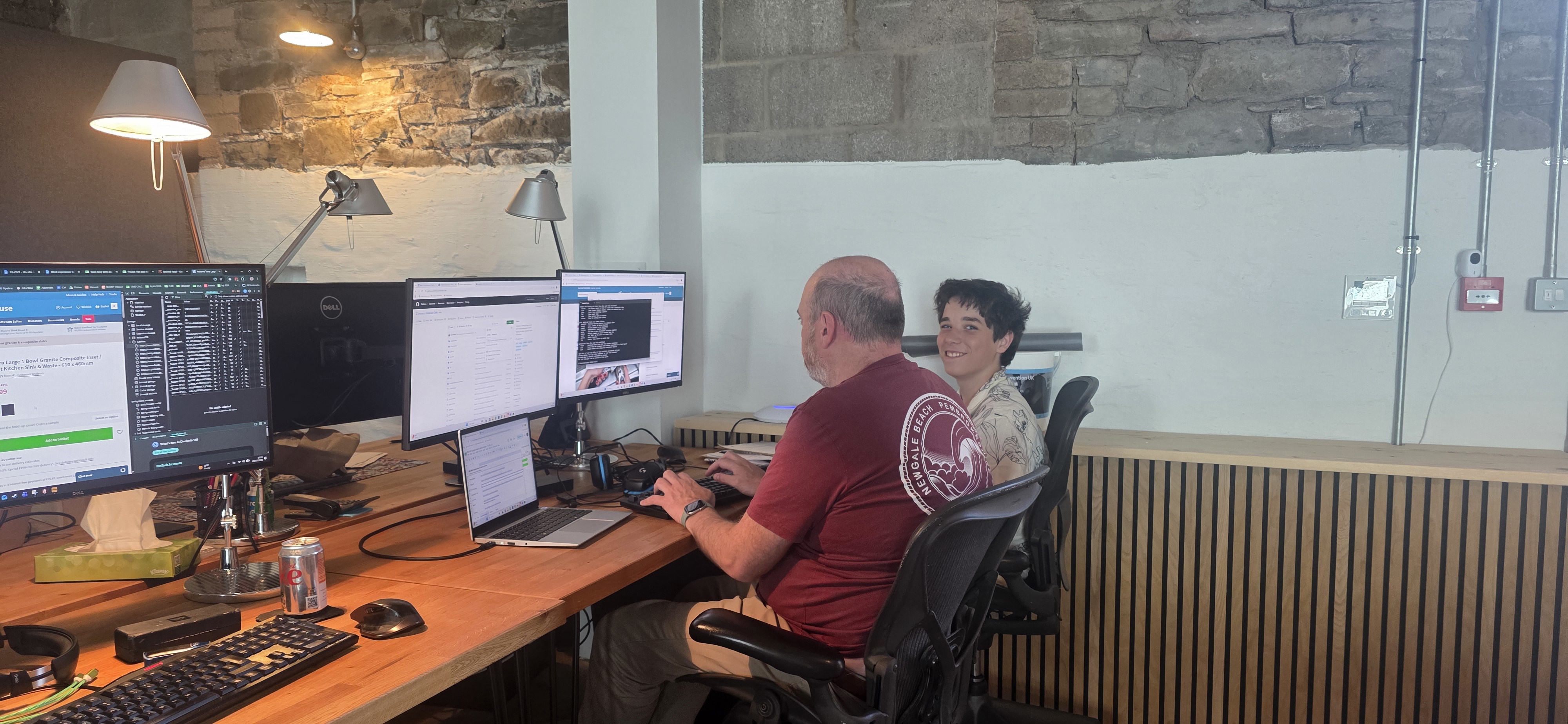
I was also given a real-website to cross-browser test following a test plan and comparing new code to original stable code so that I could help the team ensure that an upgrade had not compromised the frontend of one of Gibe’s major e-commerce clients.
Throughout my placement, I maintained a detailed project log, tracking start and end times, project duration, and dates.
During my time here, I also reflected on the rise of AI. As a relatively new technology, it holds exciting potential to positively impact almost every area of work. It can dramatically boost productivity—whether you need to brainstorm new ideas, get assistance writing a blog post, or quickly check your code. However, I’ve also come to realize that it has its downsides. When AI is so efficient that it handles everything, you miss out on the underlying process of learning how it arrived at a solution. As a junior developer, tester, or designer, it makes me wonder how I can truly embark on that journey and build foundational skills if AI can just whip up the answers without any of the graft. Furthermore, while AI feels incredibly cheap at the moment, what happens when it becomes completely indispensable and that "free-ride" finally ends?
During my work experience, I had the opportunity to utilize AI to streamline tasks like competitor analysis research and building user-personas. I also used it to create a sitemap, a job that I was told could take an hour or so if started from scratch in Miro. While these processes used to take much longer, their rapid acceleration makes me reflect: did this efficiency mean I didn't have to think as deeply, and did I learn less as a result? Alternatively, if this represents the future, it might offer the next generation a unique opening to become AI experts without the baggage of doing things "the old way."
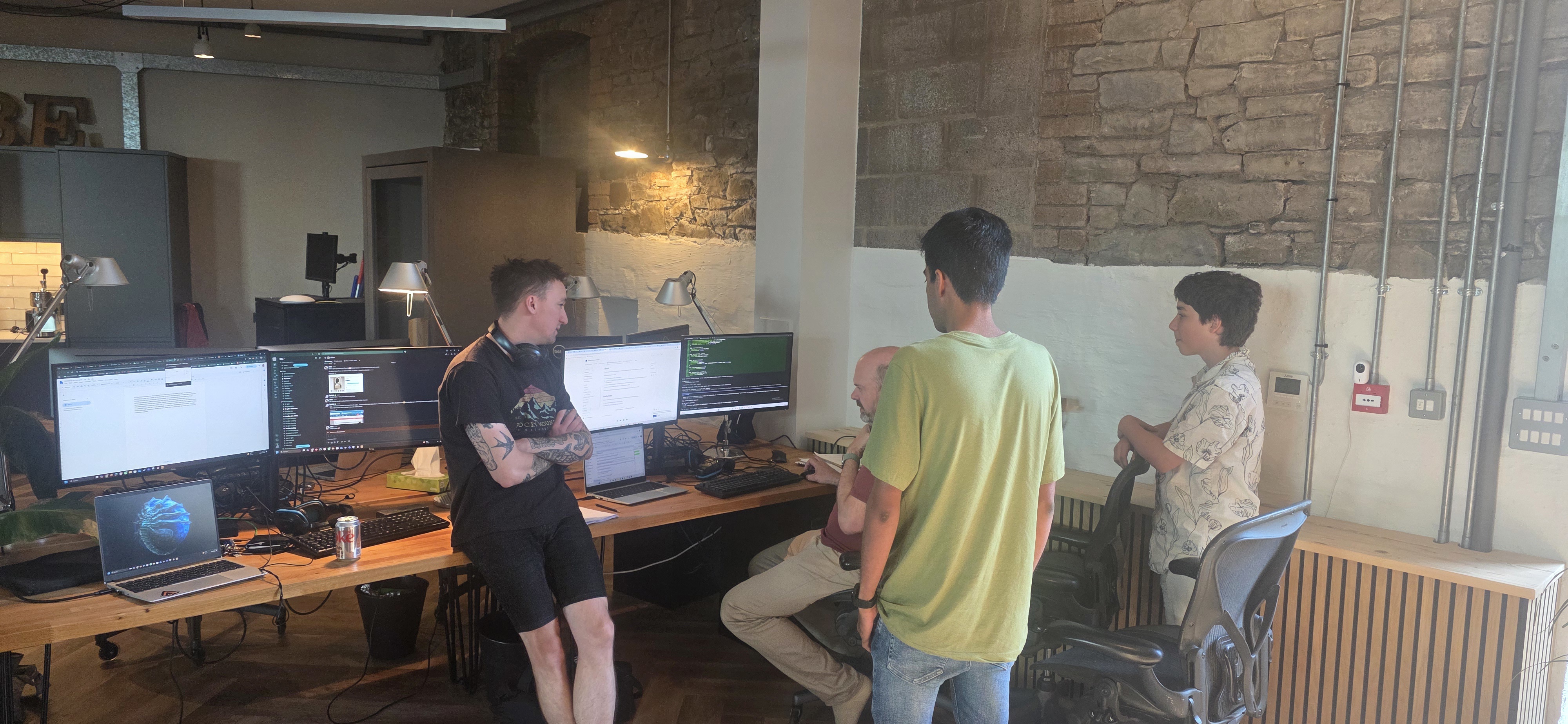
During my placement I’ve learnt the key components a website needs to function and thrive using a number of tools and learning how websites are made and what goes into making them understand how to give a professional description of products and how the company works by joining online meetings and how a friendly work environment feels. I’ve also seen how new tech can change an industry and how education never stops - there’s always new things to learn.
